
Los Angeles Public Records Coverage
Los Angeles records do not sit in one database. Access changes with the record set, the custodian, and the law that governs it. A deed can be open for inspection while its name index remains offline. A parcel can be searched by address, but not by an owner-name field in the interface reviewed for this project. Court case access varies by division. Vital copies depend on the requester's status and the copy type.
| Record group | Keeper | Web access | Coverage and route |
|---|---|---|---|
| Recorded deeds and liens | LA County RR/CC Recorder | No open name index | Records from 1850 or 1851; inspect name-and-year indexes at Norwalk or order an identified copy |
| Civil, criminal, probate, family, and small claims cases | Superior Court of Los Angeles County | Division-specific searches | Use web tools to find a case, then the clerk or courthouse terminal for the official file |
| Assessment and parcel data | Los Angeles County Assessor | AIN, address, and map search | Current parcel roll; owner-name search was not found in the reviewed public interface |
| Birth, death, and marriage records | LA County RR/CC and CDPH Vital Records | Applications, not a broad name index | Authorized or informational certified copies under California law |
| Custody and registries | LASD, CDCR, and California DOJ | Name or identifier searches | Current custody and legally disclosed registry data, each with use limits |
| Businesses and licenses | California Secretary of State and licensing boards | Public search portals | Entity filings, UCC records, license status, and discipline where disclosed |
Public records access does not erase legal limits. Juvenile and adoption matters, sealed cases, protected-victim details, confidential marriage material, and addresses shielded through Safe at Home are not ordinary open-record material. Driver data is also restricted. A useful index may identify a file without granting remote access to every image in that file.
Los Angeles Records Custodian Offices
The right office depends on who created or maintains the file. The Los Angeles County Registrar-Recorder/County Clerk combines recorder, clerk, and election duties. The Assessor operates the parcel portal. The Superior Court controls trial-court files by case division, while the California Department of Public Health serves as the statewide vital-record custodian.
LA County RR/CC
12400 Imperial Highway
Norwalk, CA 90650
Deeds, clerk filings, county vital copies, and election records
LA County Assessor
Parcel, assessment, AIN, and map access
Search by address or Assessor Identification Number
Los Angeles Superior Court
Civil, criminal, probate, family, small claims, traffic, and other divisions
Remote access varies by case type
CDPH Vital Records
California birth, death, fetal death, marriage, and divorce record services
Applications, eligibility rules, fees, and processing times
Public records made by city agencies are separate. Building permits and code files for City of Los Angeles property run through LADBS, not the county recorder. Federal cases serving Los Angeles use the Central District of California and PACER, rather than the local Superior Court portal.
Los Angeles Recorder Index Myth
Recorded real-estate documents are public, but the Los Angeles County name index is not an open internet search. RR/CC says the index is alphabetical by name and year recorded. Telephone index searches are not accepted. Researchers must schedule an appointment to review it at the Norwalk headquarters, then identify the document needed for viewing or copying. The physical layout matters. Records dated 1851 through 1957 are reviewed on the lower level, while records from 1958 forward are reviewed on the second floor. The office says it does not publish the index online because recorded documents can contain protected home addresses, including those covered by California restrictions on posting officials' addresses.
The RR/CC online copy-order page shows the separate route for a document that has already been identified.
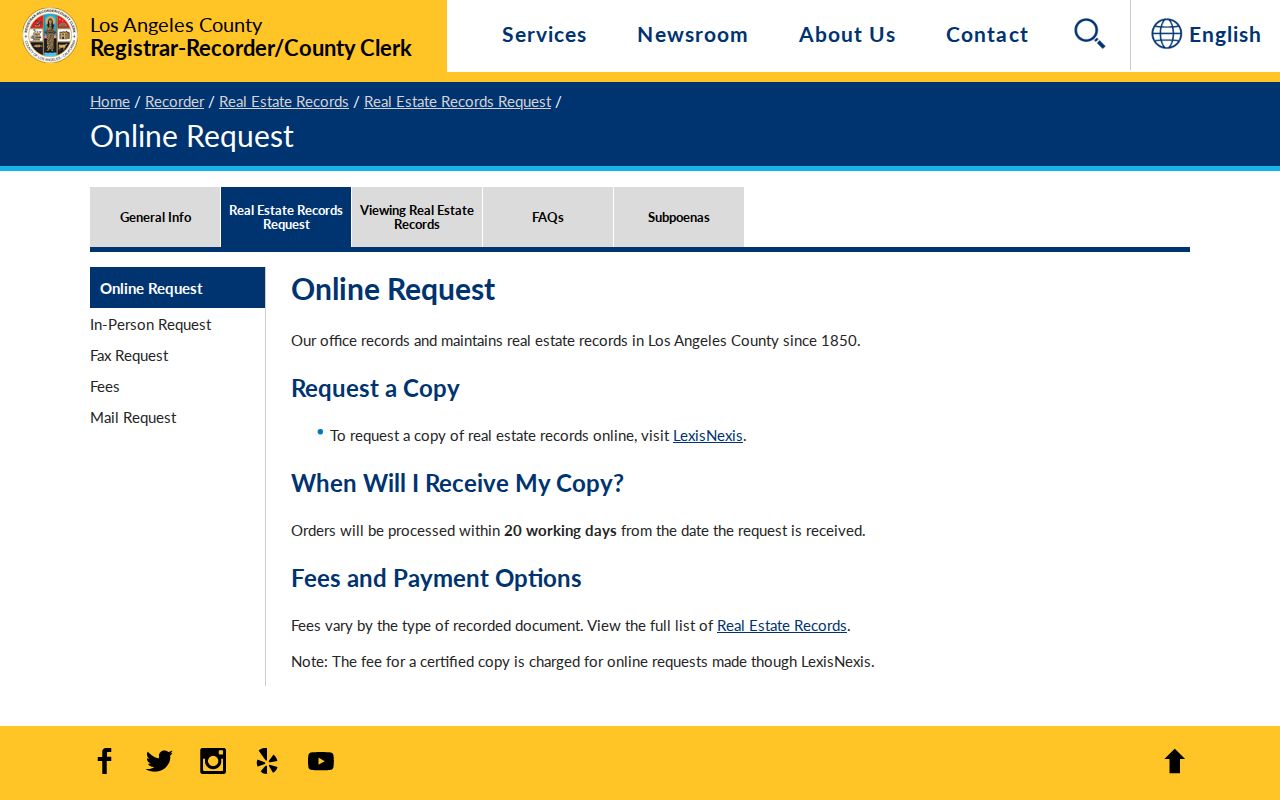
The screen reinforces a key distinction: ordering a known copy online is not the same as searching the recorder's name index online. RR/CC states that online copy orders may take 20 working days, and document fees vary.
Note: Bring both a name and an approximate recording year to make an office-only Los Angeles deed index search more focused.
Los Angeles Deed Search Fields
The recorder's workflow has fewer inputs than many web portals, yet each one controls the visit. An appointment is required for viewing. The person's name and the likely recording year direct the alphabetical index search. The floor split then determines where the books or records are reviewed.
| Search element | Form | Required | Los Angeles detail |
|---|---|---|---|
| Appointment | Scheduling link | Yes for viewing | Viewing appointments may be scheduled up to two weeks ahead |
| Name | Physical alphabetical index | Yes in practice | Use the person or entity name shown on the recorded instrument |
| Year recorded | Physical index | Yes in practice | Narrows the alphabetical index |
| Record location | Office floor | As assigned | 1851-1957 lower level; 1958-present second floor |
| Telephone request | Not available | No | The office does not conduct index searches by phone |
Once a document number or other firm reference is known, copies can be requested online, by mail, by fax, or in person. This channel split is why a broad name search and a copy order should be treated as two different tasks.
Note: The office index confirms the name-and-year route, but record-level fields should be checked on the actual entry before use.
Los Angeles Property Records Online
The Los Angeles County Assessor property-search help page is the better online starting point when an address or AIN is known.
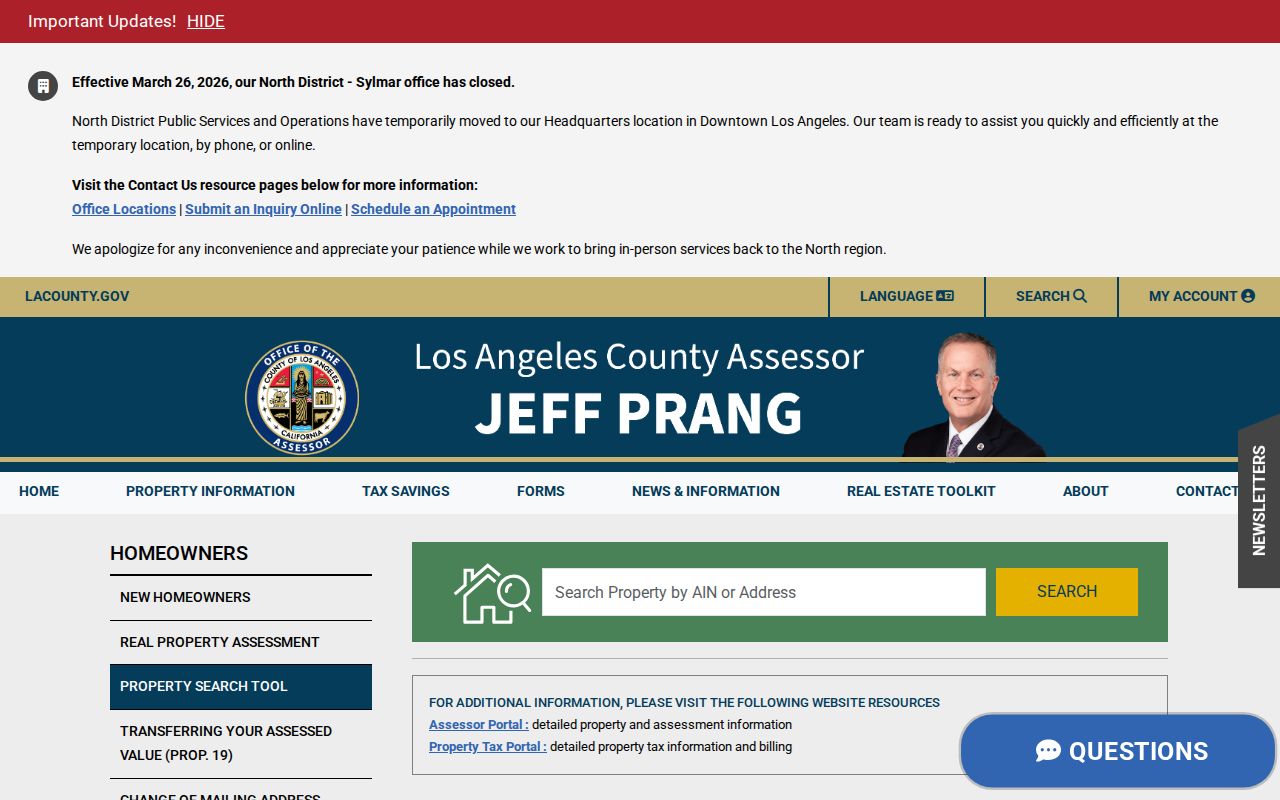
The Assessor Portal accepts an Assessor Identification Number or property address and also offers map and legal-description search paths. The inspected public interface did not confirm an owner-name search, so an address should not be converted into an unsupported name-search claim.
| Portal field | Input type | Required | Use |
|---|---|---|---|
| Search by AIN or Address | Text search | Yes for direct search | Enter the Assessor Identification Number or property address |
| Map Search | Map interaction | No | Browse parcel geography |
| Legal Search | Search mode | No | Use legal-description information |
| Owner Name | Not confirmed | No | No owner-name field was found in the inspected interface |
Property-tax information runs through a joint county portal linking the Assessor, Auditor-Controller, Treasurer and Tax Collector, and Assessment Appeals Board. LADBS adds a city-only permit layer. Its search accepts a street address, address range, APN, permit number, plan-check number, CEIS/311 request number, correction notice, and several other exact identifiers.
Insider tip. LADBS tells users to drop fractions, street prefixes, and suffixes. Enter “Spring” rather than “N Spring St,” and enter “201” rather than “201 1/2.”
Los Angeles Court Records Divide
The Superior Court does not offer one uniform statewide trial-court database. Los Angeles case access is divided among civil, criminal, family law, probate, small claims, traffic, juvenile, mental health, and appellate services. Civil, family, probate, and small claims provide name-to-case-number paths. Criminal access includes a defendant-name search.
The Los Angeles criminal case access service shows the court's remote-use terms and verification gate.
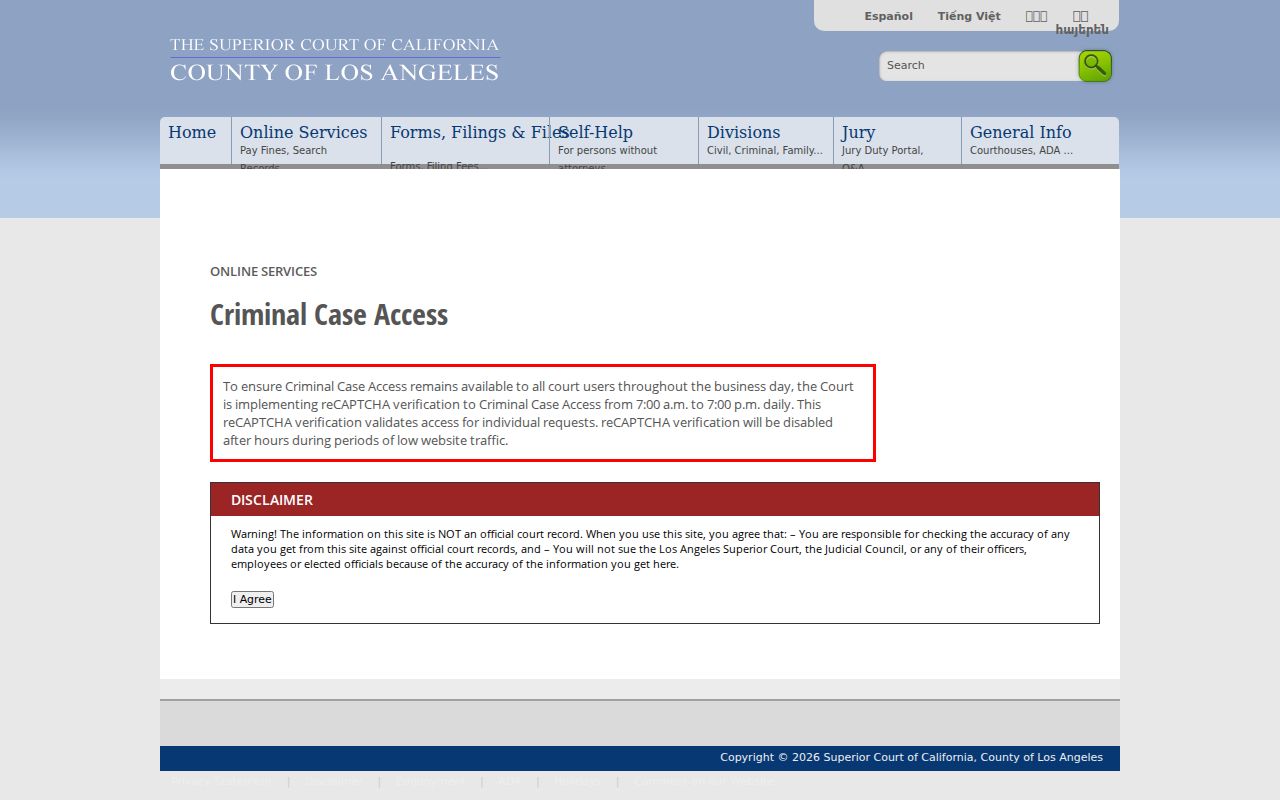
The court states that online information is not the official court record. Criminal access uses reCAPTCHA from 7 a.m. to 7 p.m. A web result can help locate a case number, party name, party type, filing date, and division, but official files and certified copies still come from the court.
Courthouse terminals may provide access that remote users cannot receive for some case types. Juvenile matters, sealed cases, adoption records, protected-victim data, and some family or mental-health details remain restricted. Federal district and bankruptcy cases are separate and use PACER and the Central District of California.
Los Angeles Vital Records Copies
Los Angeles County RR/CC issues county birth, death, and marriage records. CDPH Vital Records maintains statewide birth, death, fetal death or still birth, marriage, and divorce record services. A broad official name index for current vital events was not located. Access therefore begins with the correct application and enough event detail to identify the record.
Health and Safety Code section 103526 creates two main copy paths. An authorized certified copy is available only to a person within a listed authorized class and may require a sworn statement, identity proof, or notarization based on the request channel. Others can often request a certified informational copy, which is marked as not valid to establish identity. Confidential marriages, adoption matters, and sealed court-related files have added limits.
Divorce also illustrates the custodian split. CDPH offers limited certificate or record guidance, while the Superior Court holds the case file and judgment. A court case search may identify the action, but access to documents remains subject to court rules.
Note: An informational certified copy is still official, but California marks it as invalid for establishing the named person's identity.
Los Angeles Custody Record Lookups
The LASD Inmate Information Center searches county custody data by last name, first name, middle name, and date of birth. LAPD also publishes a 24-hour custody phone route at 213-473-6100 for checking whether someone is held in an LAPD or LASD jail. State prison custody uses CDCR's CIRIS, and federal custody uses the Bureau of Prisons locator.
The California Megan's Law website provides a separate registry search with its own disclaimer and legal-use rules.
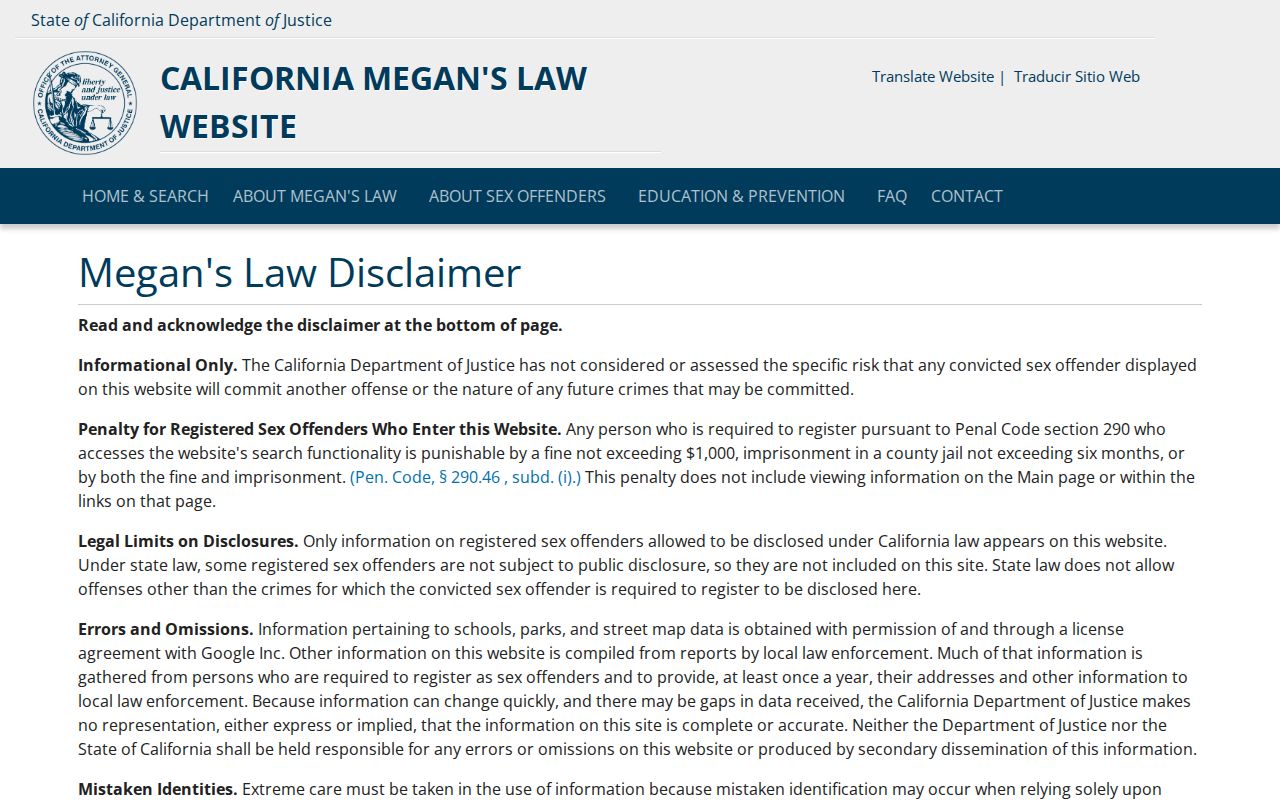
The disclaimer gate is part of the access process. Registry information must not be used to threaten, harass, or cause harm. An arrest report, incident report, investigative file, or body-camera record is not automatically open merely because a custody locator returns a name. Those files can be limited by active-investigation rules, victim and witness privacy, juvenile law, and agency exemptions.
Los Angeles Records Copy Channels
Access can mean a free index, an office appointment, a public terminal, a mailed request, or a paid certified copy. The recorder accepts copy requests through several channels once the document is known. Court documents and certifications follow court fee schedules. Vital-record charges depend on record and copy type, so the current county or CDPH schedule should be checked before sending payment.
Do not assume a fee buys faster index work. RR/CC's online deed-copy route states a 20-working-day processing period, while the underlying name index remains an in-person task. For court files, a remote summary may be free even when document images or certified copies cost money. California's Public Records Act generally limits agency charges to direct duplication costs unless another law authorizes a different fee.
Ask for electronic delivery when suitable. If a request may produce many pages, ask for a cost estimate first. A custodian can also help narrow dates, file types, or identifiers without turning a broad question into a search the agency is not required to perform.
Los Angeles Records Privacy Boundaries
California law requires line-by-line thinking. An agency may withhold an exempt part while releasing a reasonably separable nonexempt part. Common protected material includes Social Security numbers, driver license numbers, financial account details, confidential victim information, juvenile files, and sealed court records. Safe at Home participants use substitute mailing addresses to shield their actual residence in government processes.
Voter data is another special record set. The county status tool is a self-lookup, not an open name directory. Full voter information is limited to authorized election, scholarly, journalistic, political, governmental, and record-review purposes under California election law. Personal, private, commercial, and harassment uses are barred. The detailed access rules belong with the Los Angeles voter registration lookup.
Lawful use. Use open records for lawful personal research, civic review, genealogy, estate work, or scam prevention. Never use names, addresses, custody details, or court data to stalk, harass, intimidate, or harm anyone.
Note: When a record is partly exempt, the custodian should release reasonably separable nonexempt portions rather than withhold the whole file.
Request Los Angeles Public Records
The California Public Records Act, Government Code section 7920.000 and following, lets any person request an identifiable agency record unless an exemption applies. An agency normally has 10 calendar days to determine whether responsive, disclosable records exist. Unusual circumstances can support a 14-day extension. A determination is not always the same as delivery on that day.
- Choose the custodian. Send city permit files to the city department, county deeds to RR/CC, and court documents through the court's own access process.
- Check existing access. Use the relevant portal, case search, or published file first. For the recorder name index, plan for the Norwalk appointment route.
- Describe the record. Give names, addresses, dates, case or document numbers, and a narrow subject. Ask for electronic copies when that format works.
- Ask about cost. Request a fee estimate before extensive copying and state whether an ordinary or certified copy is needed.
- Review the response. A denial should identify the exemption. Ask for all reasonably separable nonexempt portions and narrow the request when that will solve the issue.
CPRA disputes are enforced through a court petition or writ rather than a federal FOIA-style administrative appeal. A prevailing requester may recover costs and attorney fees. Before litigation, a precise follow-up often resolves a dispute about scope, format, or the office that actually holds the file.
Los Angeles Records Terms Decoded
Office language can hide a simple distinction. These terms help separate finding a record from obtaining an official copy.
- Custodian
- The agency or office that keeps and releases the record.
- Index
- A finding aid that points to a file or document. An index entry is not the full image.
- Certified copy
- A copy authenticated by the custodian for an official purpose.
- Exemption
- A law that permits or requires an agency to withhold some or all requested material.
- AIN
- The Assessor Identification Number used to connect a Los Angeles County parcel with assessment, map, and tax systems.
- Situs address
- The physical property location, which can differ from the address used to mail notices.
A portal result should be read for what it is. A case summary is not a certified court file, an assessor search is not the recorder's chain of title, and an informational vital copy does not establish identity.
Los Angeles Records and DROP
California's DROP platform launched on January 1, 2026. It gives California residents one state-run path to send a deletion request to registered data brokers. Brokers begin processing DROP requests on August 1, 2026, must delete covered data within 90 days, and then repeat deletion on a 45-day cycle.
This privacy tool does not erase official government files or change a custodian's duty under open-record law. It addresses data brokers, which may compile names, contact details, and other data from many sources. Residents verify California residency and can provide identifying details needed to match broker files.
Use the California DROP platform for the state process. For deed-related fraud concerns, Los Angeles County also operates RR/CC Homeowner Notification and Assessor Homeowner Alert services. Those official alert channels help owners spot specified recorded activity without relying on a paid monitoring pitch.