
Find People Through Los Angeles Records
Choose the first source by the fact already known. Los Angeles County property tools are strongest when an address or Assessor Identification Number is available. Court, license, business, and custody systems accept names. A past address can be checked in the Los Angeles Public Library's historic street directories. Birth, death, marriage, and probate sources fit family history and heir research, but access rules differ.
A broad name can produce many false matches in Los Angeles. Add a middle name, year, case type, business, parcel, or date of birth only when the official tool requests it. Spellings may shift across compound surnames, initials, accent marks, and transliterations. Confirm a likely match through a second record held by a different custodian.
- Sort the starting fact. Decide whether the best key is a name, current address, old address, case number, license number, or business name.
- Use the narrow official index. Search the Assessor Portal for an address, the court by party name, or a state board by licensee.
- Capture the record key. Note the AIN, case number, entity number, recording year, or license number returned.
- Move to the custodian. Ask the court, recorder, clerk, or agency for the official file or copy when the index is not enough.
- Cross-check identity. Compare dates, locations, relatives, or organizations before treating two records as one person.
Note: A Los Angeles postal address does not always identify the city agency with custody, so verify the legal jurisdiction first.
Los Angeles People Search Offices
Los Angeles people records do not sit in one building or database. The county Registrar-Recorder/County Clerk records deeds, issues county vital records, handles fictitious business names, and also serves as elections office. The county Assessor connects addresses and AINs to parcel records. The Superior Court keeps case files, while city departments hold permits, planning, and municipal records. California agencies supply statewide vital, business, license, prison, and unclaimed-property sources.
Registrar-Recorder/County Clerk
12400 Imperial Highway
Norwalk, CA 90650
Recorder, clerk, elections
Los Angeles County Assessor
Countywide parcel keeper
Address, AIN, map search
Free public portal
Los Angeles Superior Court
Civil and criminal cases
Family, probate, small claims
Division-based access
The City of Los Angeles directory routes searches to elected offices, departments, bureaus, boards, and commissions.
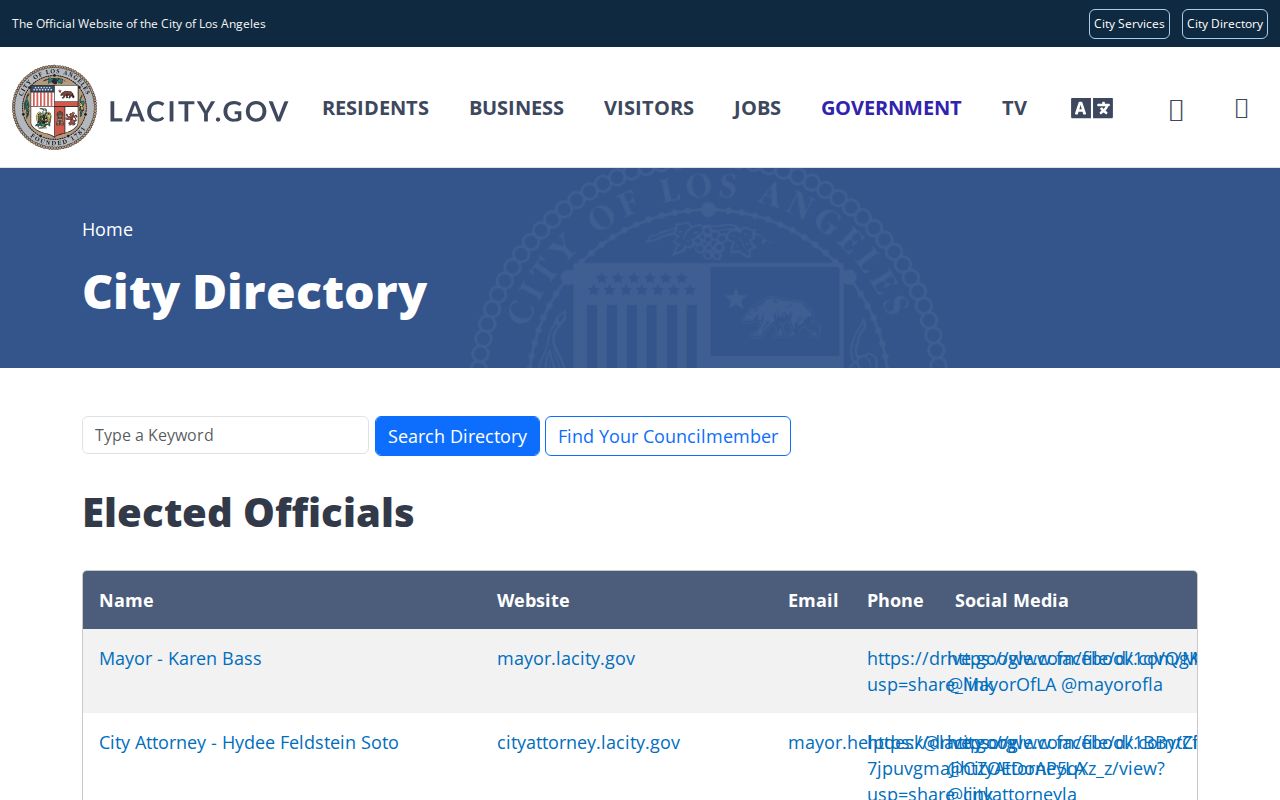
The directory is best for official roles and agency contacts, not as a list of Los Angeles residents.
The office holding the index may not hold every related item. A parcel begins with the Assessor, a deed copy comes from the Recorder, and a tax bill belongs to the Treasurer and Tax Collector system. The detailed request rules live in the Los Angeles public records search resource.
Los Angeles Deed Search Stays Offline
Here is the Los Angeles records myth worth dropping: public real estate records are not the same as a public online name index. The RR/CC says its alphabetical indexes are reviewed in person at Norwalk by name and recording year. Telephone index searches are not accepted. Once a document is identified, copies may be ordered through available online, mail, fax, or in-person channels.
The RR/CC viewing page shows the actual access rule.
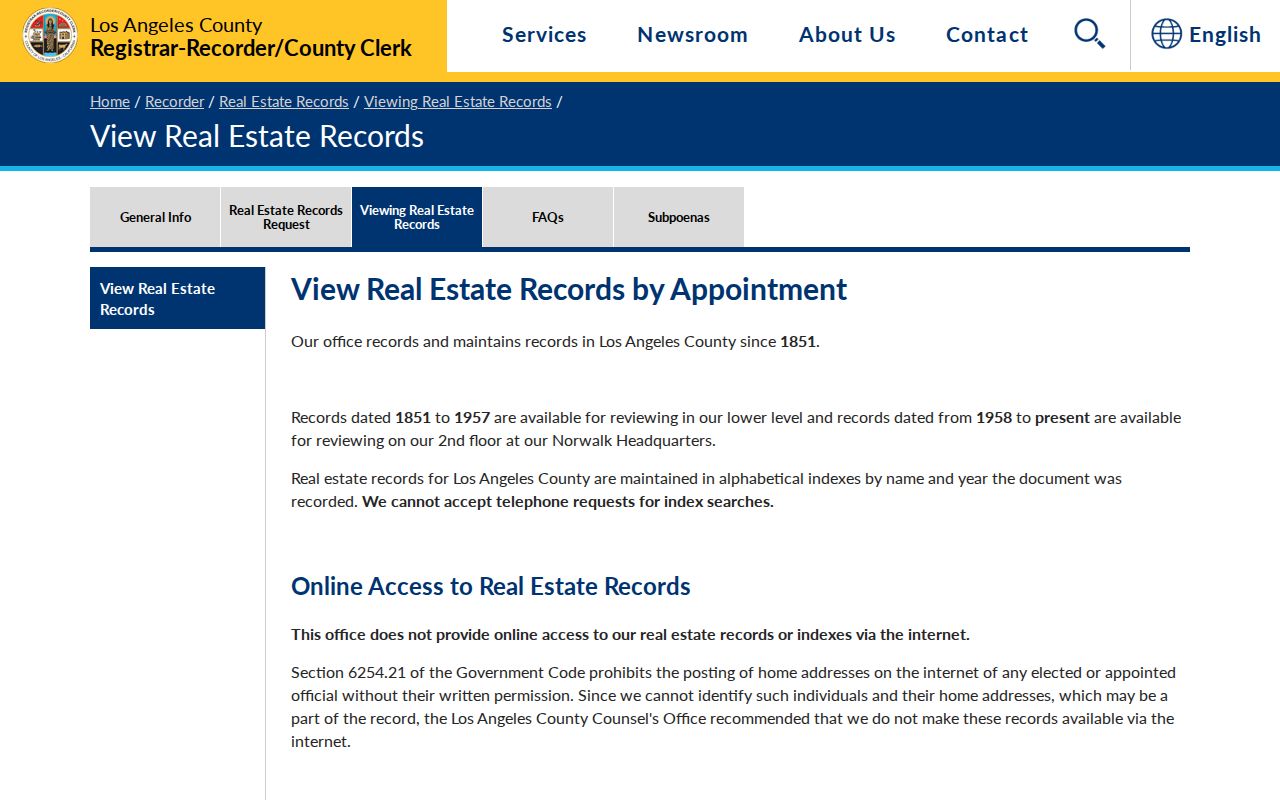
This source confirms that the index itself is office-only, which changes the plan for any deed-based Los Angeles people search.
- Grantor
- A person or entity transferring an interest in recorded property.
- Grantee
- A person or entity receiving that interest.
- Index
- A finding aid that points to a document, not the certified document itself.
- AIN
- The Assessor Identification Number used to connect parcel, map, tax, and permit searches.
Los Angeles Property Search by Address
The fastest property trail begins with an address or AIN, not an owner name. The LA County Assessor Portal supports both keys plus map and legal-search modes. Its public interface did not expose an owner-name search during the official research, so do not assume one exists. Use the parcel result to establish the correct property and carry its AIN into tax, permit, map, or recorder work.
The LA County Assessor Portal displays the address and AIN search entry point.
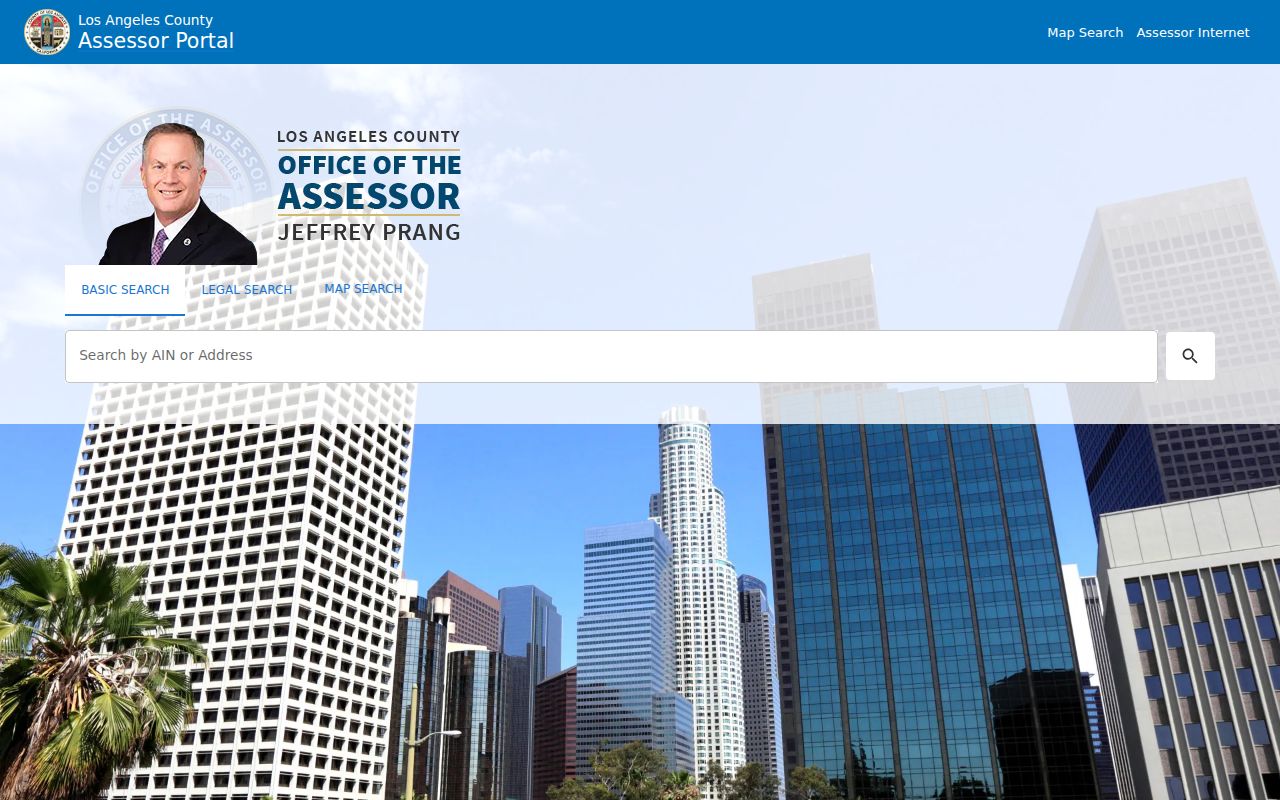
The map view can help distinguish neighboring parcels and boundary issues before a request moves to another Los Angeles County office.
| Search field | Input | Use |
|---|---|---|
| AIN or Address | Parcel number or property address | Direct parcel search |
| Map Search | Map interaction | Browse parcel location and context |
| Legal Search | Legal-description mode | Find property through recorded land terms |
| Owner Name | Not confirmed in public interface | Do not use as the starting field |
The practical flow is short: address to AIN, AIN to parcel and tax context, then known name and likely year to the Recorder's physical index. Each step narrows the next.
Los Angeles Court Record Name Search
The Superior Court of California, County of Los Angeles divides online access by case type. Civil, family, probate, and small claims services include ways to search for a case number by name. Criminal services offer defendant-name search. Traffic uses different keys. A web result can identify a case title, party names, party type, filing date, and case number, but the court warns that online data is not the official court record.
The Find Case Information portal is the starting point for case-number and party access.
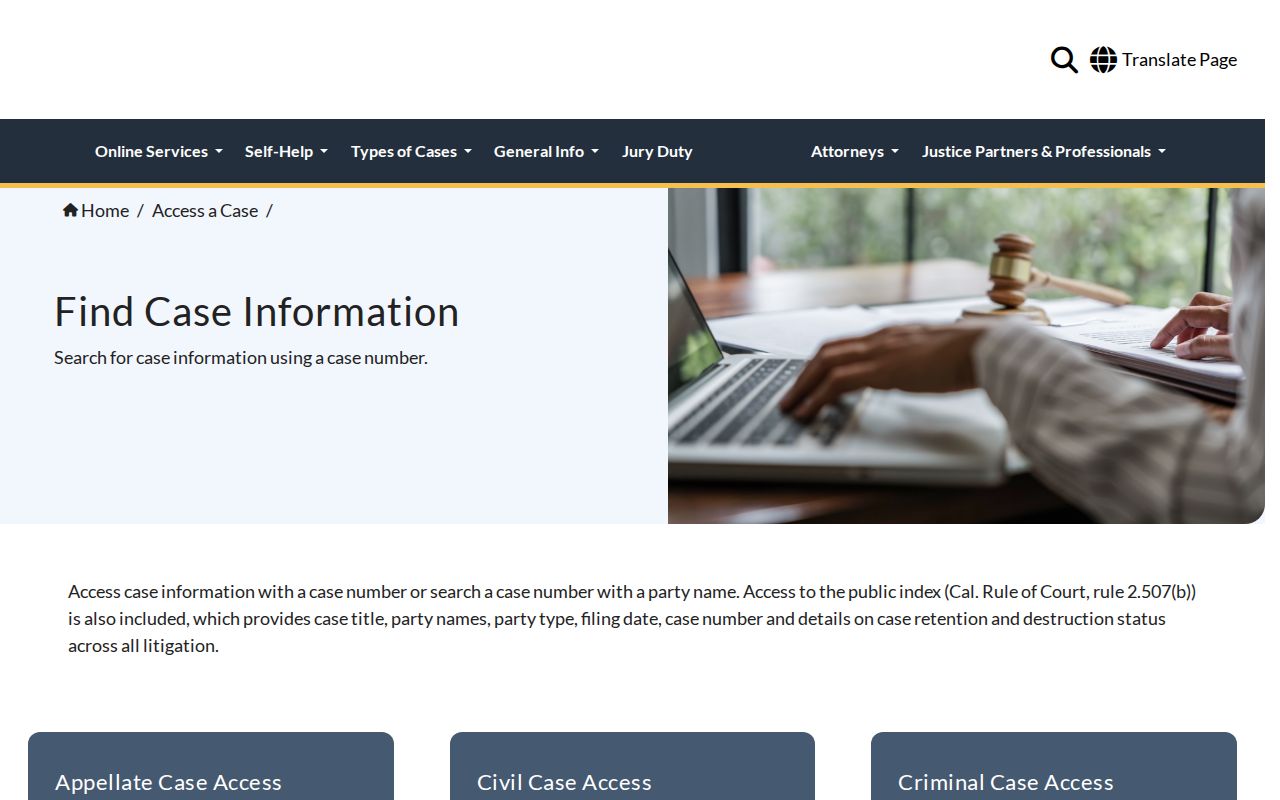
Use a name search to find the number and division, then consult the court file, public terminal, clerk process, or document service for authoritative material.
| Case area | Name route | Next access step |
|---|---|---|
| Civil, probate, family, small claims | Search case number by name | Case access, calendar, image service, or clerk |
| Criminal | Defendant-name search | Summary, courthouse terminal, or clerk |
| Federal | PACER party search | Central District docket and filed documents |
Juvenile, adoption, sealed, many mental-health, protected-victim, and confidential family matters are not general name-search sources. Remote access can also be narrower than courthouse terminal access. Respect every restriction.
Los Angeles Vital Record Trails
County events lead to the Los Angeles County RR/CC, while the California Department of Public Health Vital Records office maintains statewide birth, death, fetal death or still birth, marriage, and limited divorce records. Divorce case files and judgments belong to the Superior Court. There is no broad official county or state name portal for current vital records in the research.
California uses authorized certified copies and informational certified copies under Health and Safety Code section 103526. An authorized copy requires a qualifying relationship or status, a sworn statement, and identity steps that vary by request channel. An informational copy is marked as not valid to establish identity. Confidential marriage, adoption, and sealed matters carry more limits.
For gaps in a family trail, combine death records with probate cases, recorded deeds, obituaries, census records, and city directories. The CDPH Vital Records office publishes current applications, fees, and processing links. Check those live details before ordering.
Note: California does not use one simple age cutoff for every modern vital record; copy type and requester status control access.
Los Angeles Directory Search at LAPL
The Los Angeles Public Library can solve searches that modern parcel and phone tools cannot. Its digitized Los Angeles-area city and street-address directories cover 1875 through 1987 and support name or address searching. Standard city directories can connect a surname to a home, spouse, occupation, and place of work. Street-address editions reverse the trail by identifying occupants at a known old address.
The LAPL genealogy guide introduces its unusually deep local collection.
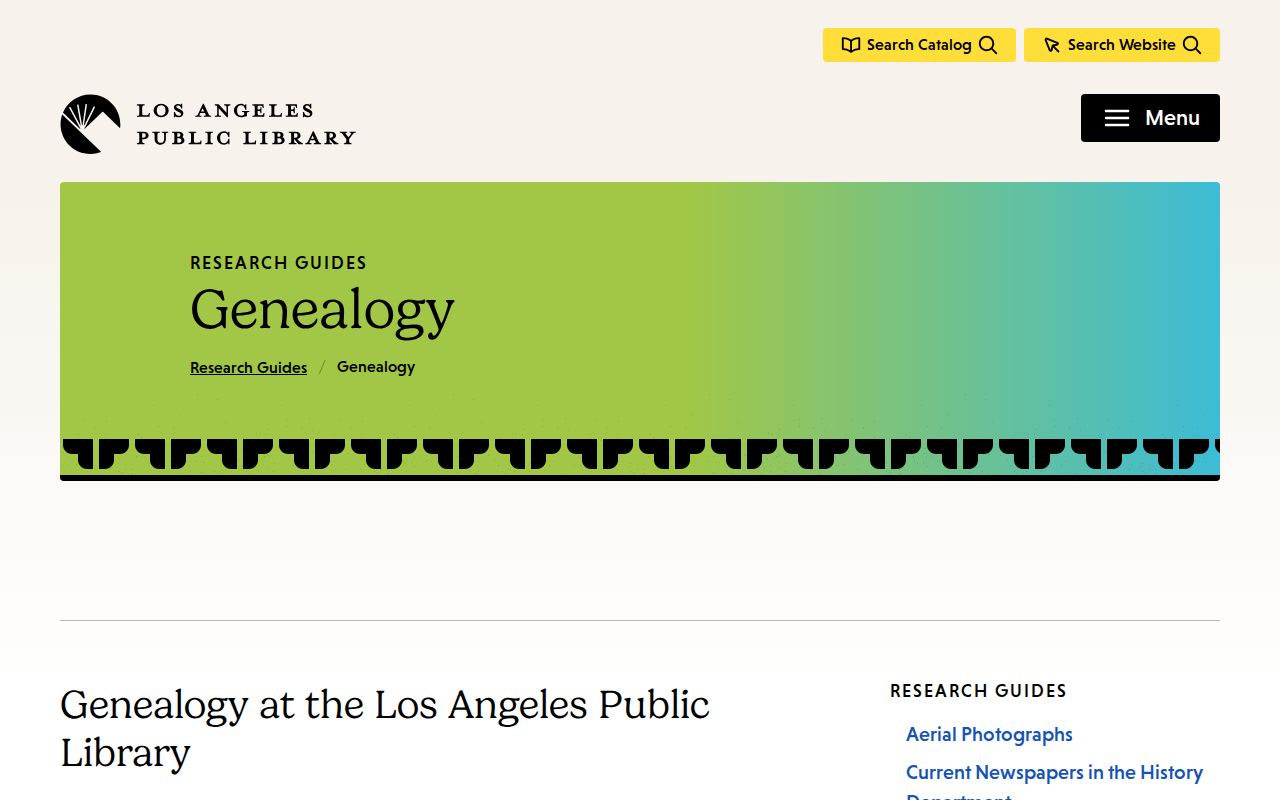
LAPL reports about 52,000 genealogy titles, more than 5,000 rolls of city-directory microfilm, and Los Angeles city directories from 1873 through 1942 in paper and film.
Search initials, spelling variants, maiden and married names, and common directory abbreviations. Older entries may describe a widow as "wid" followed by a spouse's name. The library also holds Los Angeles Times microfilm from 1881 forward, historical newspaper databases, census material, passenger lists for San Pedro, Wilmington, and Los Angeles from 1907 through 1948, and Southern California federal naturalization records. These sources can bridge a move, death, or name change.
Note: Most genealogy books at Central Library are reference-only, so plan an on-site visit when the digital collections stop short.
Los Angeles Permit Search Details
Inside the City of Los Angeles, building records add a second address trail. The Department of Building and Safety Permit and Inspection Report accepts a single address, an address range, an APN, or several record numbers. Permit and inspection files can establish what happened at a property and when. Results should be read only for fields the live record actually displays.
The LADBS online service shows the many available search routes.
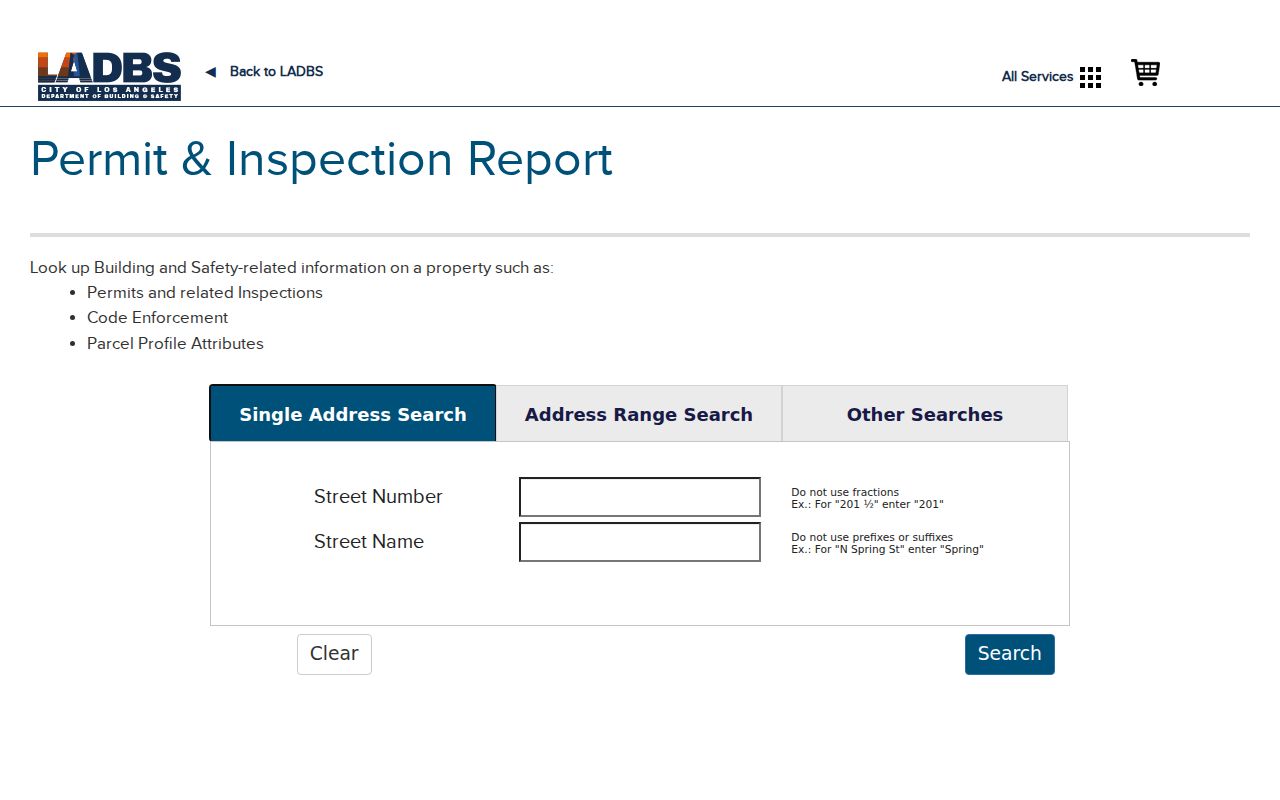
The most useful insider detail is formatting. For an address such as 201 1/2, enter 201. Drop street prefixes and suffixes, so N Spring St becomes Spring. If an address fails, try the APN from the county Assessor Portal. Other routes accept permit or application numbers, plan check or job numbers, CEIS/311 requests, correction notices, TCO numbers, invoices, modifications, and trade-license fields.
Note: LADBS covers city property, while an address elsewhere in Los Angeles County may belong to another building or planning authority.
Los Angeles Business and License Search
Business and license records are strong name sources because their custodians publish structured filings or status data. The California Secretary of State business search can connect an entity to its agent, addresses, status, and filed documents. UCC search uses debtor, secured-party, or file-number paths. Los Angeles County fictitious business name records can connect a DBA to the filer through the county clerk process.
The California SOS bizfile search provides the statewide entity route.
A business filing may identify an agent or officer, but it is not a complete ownership source for every entity. Use its entity number and filing history to keep names distinct.
Professional tools then test a specific role. The Department of Consumer Affairs license search spans many California boards.
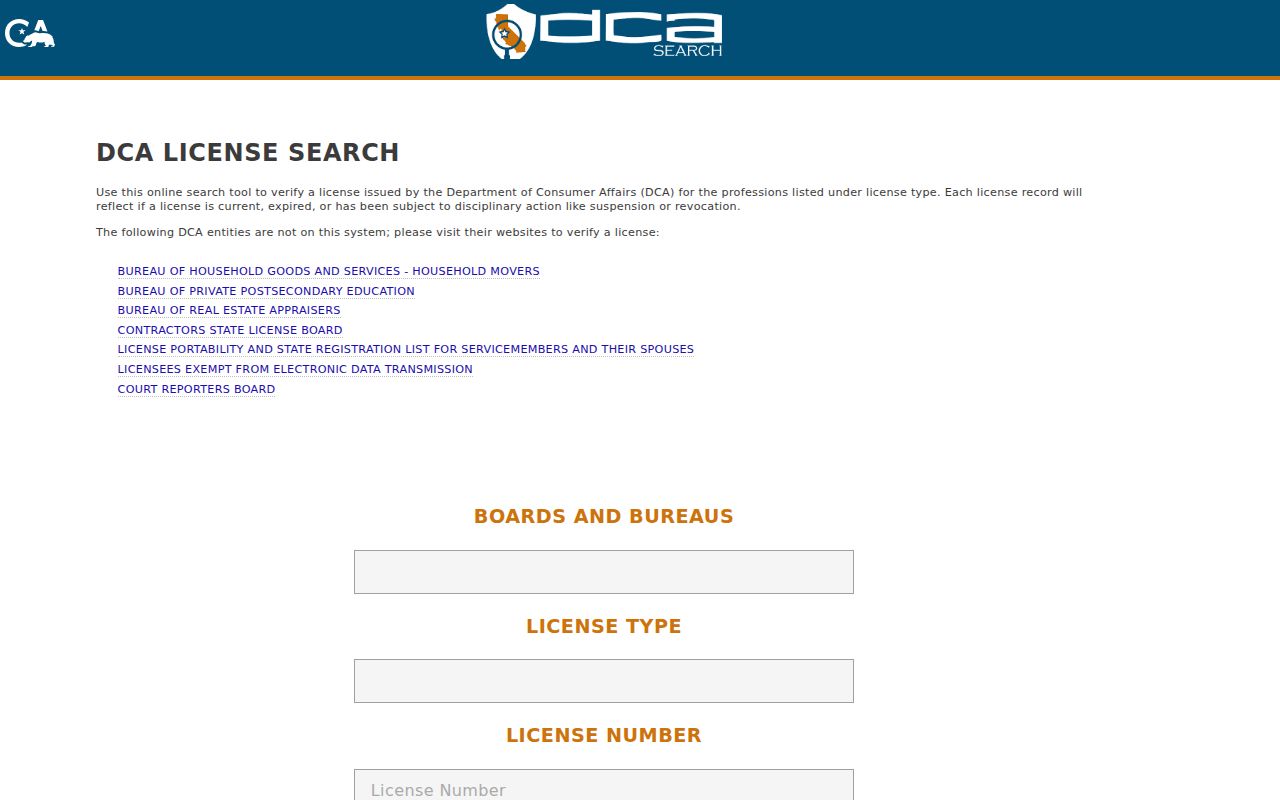
Board records may show the license number, type, status, and discipline where public. Attorneys use the State Bar search, contractors use CSLB, and real estate licensees use DRE. Verify against the named board rather than assuming two similar names identify one person.
Los Angeles Custody Record Search
The Los Angeles County Sheriff's Department Inmate Information Center searches county custody by last name, first name, middle name, and date of birth. A birth date helps distinguish common names. For city custody questions, LAPD says the public may call its custody line at 213-473-6100 at any hour to ask whether a person is held in an LAPD or LASD jail.
State prison records use the California Department of Corrections and Rehabilitation CIRIS search. Federal custody uses the Bureau of Prisons locator. These are separate systems, and a person missing from one should not be assumed absent from every form of custody. Arrest reports, body-camera files, and active investigations also have distinct agency request rules and privacy limits.
Los Angeles Voter Lookup Limits
The Los Angeles County voter verification form is a self-lookup, not a public resident directory. It requires last name, birthdate, residence house number, and ZIP code. The combined identifiers are meant to let a voter check a matching registration. California voter files are released only for purposes defined by Elections Code sections 2188 and 2194 and related regulations, not for ordinary personal searching.
Los Angeles County serves more than 500 political districts and more than four million registered voters. That scale explains why precinct, district, address, and status data need tight matching. The separate Los Angeles voter registration lookup covers self-verification, formal file requests, permitted uses, fees, and confidential voter protections without treating the roll as an open people directory.
Los Angeles Unclaimed Property Search
California's unclaimed-property database can connect a name with an address reported by a business or institution. It is useful when an old address, maiden name, or business name is already known. Search likely spelling variants and compare the reported city before starting a claim. A result means the State Controller holds property associated with the report; it does not by itself prove a current location.
The State Controller's unclaimed-property search is the official free route.
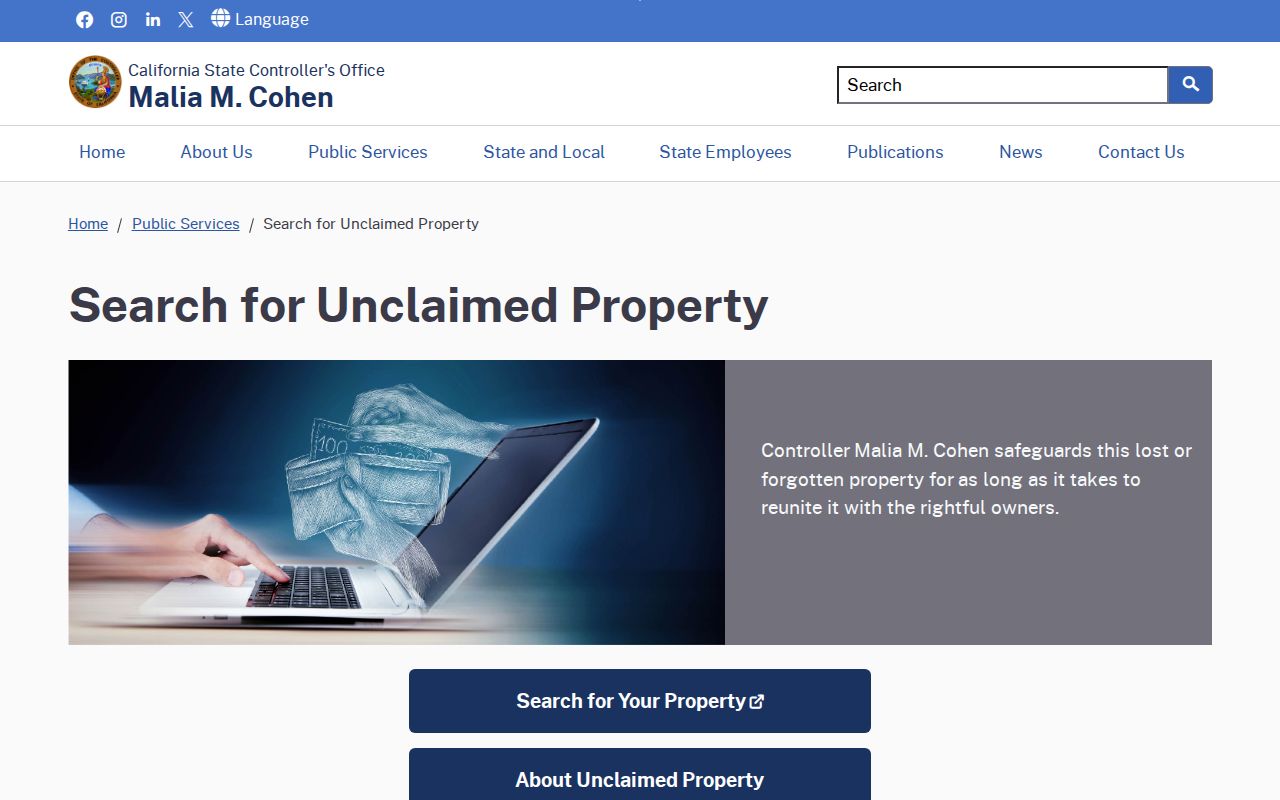
The official source also avoids fee-based solicitations that offer to recover property. Confirm the owner name and reported address, then follow the Controller's proof and claim instructions.
Note: Treat an unclaimed-property address as a historical report point, not proof that the owner still lives or receives mail there.
Los Angeles Record Privacy Controls
Public access has firm edges in California. Safe at Home gives qualifying participants a substitute mailing address and helps shield a residential address in government records. Voter information is purpose-restricted. DMV personal data falls under federal privacy law. Vital records distinguish authorized from informational copies. Courts restrict juvenile, sealed, adoption, protected-victim, and other confidential files.
California's DROP platform adds a different privacy route for data held by registered brokers. It launched on January 1, 2026, so California residents can send one deletion request through the state system. Brokers begin processing those requests on August 1, 2026, with duties described by CalPrivacy. This process concerns broker-held data, not the deletion of lawful official court, deed, or agency records.
The California DROP portal explains identity verification and request steps.
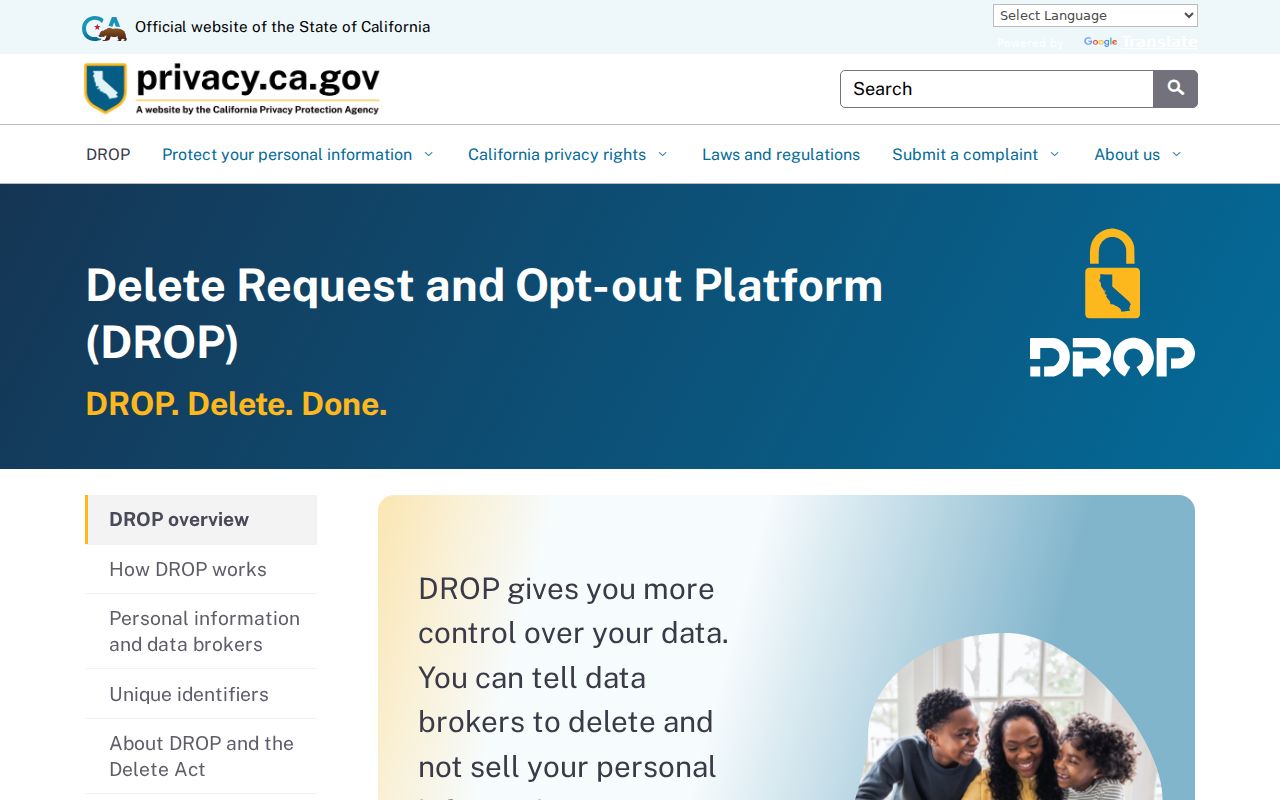
Use the official system rather than giving sensitive identifiers to an unknown service. When a protected address is absent or replaced, do not try to defeat the safeguard.
Los Angeles People Search Choices
Official records and commercial search products serve different roles. County, city, court, and state systems identify the custodian and state what the record means. Commercial sources may combine phone, marketing, court, and property data, but old addresses and merged identities can persist. An official index can also be incomplete online, as the Los Angeles recorder example shows, yet it still provides the authoritative route to the document.
| Source type | Best use | Main limit |
|---|---|---|
| Official portal | Find a case, parcel, filing, license, or custody record | One custodian and one record system |
| Office or library | Reach non-web indexes, older files, microfilm, and certified copies | May require an appointment or on-site work |
| Commercial compilation | Generate possible leads for personal research | May be stale, merged, or wrong |
A sound Los Angeles people search ends where it began: at the custodian. Save the case number, AIN, document year, entity number, or license number. Check the official record, note its date, and keep uncertainty clear when names alone do not establish identity.